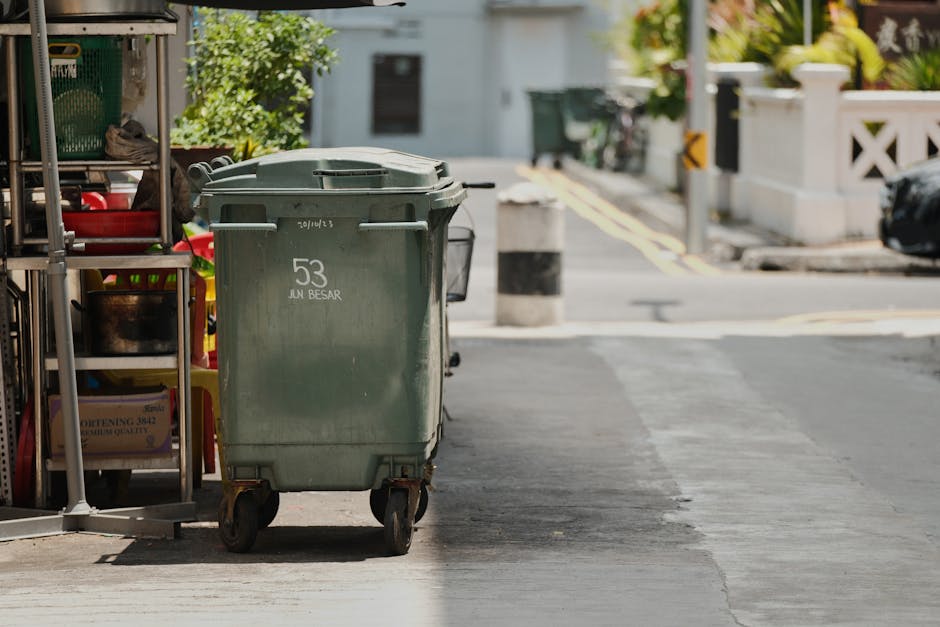
Bulky waste removal guide for RM14 postcodes

If you live in an RM14 postcode and a sofa, mattress, broken wardrobe, or pile of mixed household items is getting in the way, you are not alone. Bulky waste removal sounds simple on paper, but in real life it often turns into a bit of a faff: checking what can be taken, working out access, deciding whether a skip is overkill, and figuring out what should be recycled rather than dumped. This bulky waste removal guide for RM14 postcodes breaks the job down into clear steps, so you can make a sensible choice without the stress.
Whether you are clearing one awkward item from a flat, emptying a garage, or dealing with a full property refresh, the right approach saves time, money, and quite a bit of back pain. Let's face it, moving a wardrobe down two flights of stairs is not most people's idea of a nice Saturday.
Why bulky waste removal matters in RM14 postcodes
RM14 covers busy, lived-in parts of Havering where homes, flats, garages, lofts, gardens, and small business premises all generate bulky items at different times. A bulky waste job in this area is rarely just about "getting rid of stuff". It is also about access, timing, neighbours, parking, stairwells, and not leaving a mess behind.
That matters because bulky items are awkward in ways that normal rubbish is not. They can block hallways, collect dust, attract moisture in garages, and make a room feel smaller than it is. A single unwanted sofa can change how you use a room. A stack of broken office chairs can quietly become a safety issue. In a flat, bulky items near fire routes are even more annoying. And in a garden, old sheds, plant pots, or tired fencing can make the space feel neglected.
There is also the environmental side. Bulky waste is often a mix of materials: wood, metal, textiles, plastics, foam, electrical parts, and sometimes hazardous components. A decent clearance approach looks at reuse and recycling first where possible, rather than treating everything as general waste. That is why services such as recycling and sustainability practices matter so much in bulky waste jobs. The better the sorting, the less useful material ends up in disposal streams it does not belong in.
Key point: if you are in RM14, bulky waste removal is not only a clearance task. It is a space, safety, access, and disposal problem rolled into one.
How bulky waste removal works
The process is usually straightforward once you know the sequence. The exact method depends on the amount of waste, where it is located, and whether any items need careful handling. In many cases, the job starts with a quick look at the load: one item, several items, or a full room or property. From there, the approach can be tailored to the type of clearance.
For example, a single old sofa is a very different job from a full loft clearance or garage clear-out. If your bulky waste is mixed in with furniture, white goods, or household clutter, a more general house clearance or home clearance may make better sense. If the items are mainly old seating, beds, or cupboards, then a more focused furniture clearance or furniture disposal service may be the cleaner fit.
In practical terms, the job usually works like this:
- Assess the items. Decide what is bulky, what is reusable, and what may need special handling.
- Check access. Think about stairs, lifts, narrow doorways, parking, and whether items need dismantling.
- Sort by material. Separate furniture, appliances, garden waste, builder's debris, and any sensitive items.
- Remove safely. Items are carried out with minimal disruption, ideally without damaging walls or flooring.
- Dispose responsibly. Reusable or recyclable items are diverted where appropriate; the rest is processed correctly.
People often ask whether they should use a skip instead. Sometimes yes, sometimes no. It depends on what you are clearing, how much lifting you want to do, and whether the waste will sit outside for a while. If you want to understand the trade-off, the guide to what can go in a skip is a useful comparison point.
To be fair, bulky waste removal is often easiest when you stop thinking in "bins" and start thinking in "loads". One bulky item, one mixed room, one awkward access job - each one needs a slightly different plan.
Key benefits and practical advantages
The obvious benefit is simply getting your space back. But there is more to it than that. Good bulky waste removal should make your day easier, not just remove stuff from point A to point B.
- Faster clearing: You do not have to make repeated trips to the tip or borrow a van.
- Less physical strain: Heavy lifting is handled by people used to moving awkward items without causing damage.
- Better sorting: Reusable items, recyclables, and general waste can be separated more intelligently.
- Cleaner results: The room, hallway, garden, or garage is left in a more usable state.
- Better for tight spaces: RM14 properties can have narrow access, shared entrances, or limited parking. A planned removal helps.
- Reduced clutter stress: Once the bulky items are gone, the place feels manageable again. That is not a small thing.
For many households, the practical advantage is time. A clear-out that might take you an entire weekend can often be handled much more efficiently when it is organised properly. For businesses, the advantage is even clearer: less downtime, safer walkways, and no piles of old office gear hanging around after a refurb.
If you are dealing with a mix of bulky items and other waste, a broader waste removal service may be more efficient than trying to split the job into too many small parts. Sometimes simpler is better, honestly.
Who this is for and when it makes sense
This guide is for anyone in RM14 who has bulky items that are too large, heavy, or awkward for normal household bins. That includes homeowners, tenants, landlords, letting agents, office managers, shop owners, and people getting a property ready for sale or rent.
It tends to make sense in situations like these:
- You have a sofa, mattress, wardrobe, or appliance that cannot go out with normal rubbish.
- You are clearing a flat and need help with stairs or shared access.
- You are emptying a garage, loft, or garden after years of "I'll sort that later".
- You are replacing furniture and want the old items removed at the same time.
- You need business items removed, such as desks, chairs, cabinets, or archive storage.
- You have a one-off job and do not want the hassle of hiring a skip or making multiple trips.
It is also a good option when some of the items are in decent condition and could be reused or passed on. A service that can handle mattress and sofa disposal or related furniture items is often the right direction if the load is mainly domestic and a bit bulky rather than genuinely hazardous.
In our experience, people usually know the job has become "real" when the pile starts moving from one corner to another and never actually leaves the room. If that sounds familiar, you are probably ready.
Step-by-step guidance
Here is a practical way to tackle bulky waste removal in RM14 without overcomplicating it.
1. Identify exactly what needs removing
Walk through the space and list everything that is bulky, heavy, or awkward. Be honest with yourself. That half-dismantled shelving unit in the corner still counts. So does the broken exercise bike nobody has used in years.
2. Separate ordinary waste from bulky waste
Not everything should be bundled together. Loose bagged rubbish, cardboard, and small recycling may need a different route from sofas, beds, or large cabinets. Separating things early helps the collection go more smoothly and can reduce avoidable costs.
3. Check for special items
Appliances, fridges, gas-related items, or anything that may contain oil, chemicals, or other special components need care. If you have items that are not straightforward furniture or household junk, look at fridge and appliance removal or, where relevant, hazardous waste disposal. Do not guess with these. It is not worth the risk.
4. Make access as easy as possible
Move smaller objects out of the way, unlock gates, reserve space if possible, and check whether a lift or stairwell needs to be kept clear. A minute spent on access can save twenty minutes of awkward manoeuvring later.
5. Book the right type of service
If the job is mainly furniture, a specialist clearance might be best. If it includes junk from several rooms, a more general home or house clearance may suit better. For offices, use a service that understands commercial access and working hours. If you want planning support before the job starts, the page on pricing and quotes can help you understand how a job is usually assessed.
6. Confirm timing and expectations
Agree what is being taken, where it is located, and whether dismantling is needed. If you are in a flat, mention floor level, parking limitations, and any building rules. Those details matter more than people think.
7. Inspect the space once the items are gone
After removal, take a moment to check corners, behind cupboards, and under shelves. Dust and stray fixings have a habit of hiding in plain sight. A quick sweep helps make the space feel properly finished rather than half-done.
Expert tips for better results
A few simple choices can make bulky waste removal much easier. They are small things, but they add up.
- Photograph the load before booking. A few clear photos help size up the job properly.
- Measure awkward items. Wardrobes, large wardrobes, and corner sofas are the classic troublemakers.
- Remove loose contents first. Drawers, cushions, shelves, and bins make lifting easier and safer.
- Be realistic about dismantling. A bed frame that can come apart is much simpler to move than one left in a single piece.
- Keep a "maybe" pile separate. Items you might donate, reuse, or keep should not be mixed in with waste by accident.
- Ask about recycling pathways. Good operators do not just throw everything into one heap and hope for the best.
One small but useful habit: put the obvious rubbish near the exit and the uncertain items a little further back. It sounds basic, yet it stops the whole job turning into a puzzle at the door. And yes, that puzzle always seems to happen when everyone is already tired.
If the clearance is part of a bigger property tidy-up, pairing it with garage clearance, loft clearance, or garden clearance can be a smart move. Bundling similar jobs often gives you a cleaner final result and fewer loose ends.
Common mistakes to avoid
Bulky waste jobs tend to go wrong in predictable ways. The good news is that most of them are avoidable.
- Assuming everything is standard waste. Appliances and special items need separate handling.
- Underestimating access problems. A single tight staircase can change the whole job.
- Mixing reusable and non-reusable items together. This can reduce what can be recovered or recycled.
- Leaving heavy lifting to the last minute. That is how people end up injuring a shoulder on a Monday morning.
- Forgetting to check building rules. Flats and shared properties may have restrictions on collection times or parking.
- Not clearing the route. Hallways, door frames, and garden paths should be protected and unobstructed.
A more subtle mistake is choosing the wrong type of service because it looks cheaper on the surface. A low upfront price can turn into a messy job if the provider is not set up for the real amount of lifting, sorting, or access work involved. Sometimes the "cheap" option becomes the expensive one by tea time.
Tools, resources and recommendations
You do not need a warehouse full of equipment, but a few practical tools help.
- Strong gloves: Useful for sharp edges, splinters, and dusty items.
- Measuring tape: Essential for sofas, appliances, and awkward furniture.
- Camera phone: Handy for photos when requesting a quote.
- Basic screwdrivers or Allen keys: Useful if furniture can be dismantled safely.
- Dust sheets or old blankets: Helpful for protecting floors and stair rails during removal.
- Labels or marker pens: Great for separating items to keep, donate, recycle, or remove.
On the service side, it helps to know where a job sits in the wider clearance picture. For example, if the items are mostly office-related, an office clearance may be more appropriate. If the load is mainly domestic clutter across several rooms, home clearance or flat clearance can be more efficient.
You may also find the company's pages on insurance and safety and health and safety policy reassuring if you want to know how the work is approached behind the scenes. That sort of detail matters more than most people realise.
Law, compliance, standards, and best practice
Bulky waste removal in the UK is not a free-for-all. You do not need to become a compliance expert, but it helps to understand the basics.
First, waste should be handled by a provider that takes proper responsibility for collection and disposal. If you are a householder, you still have a duty to avoid fly-tipping and to make sensible choices about who handles your waste. If a clearance looks suspiciously informal, it is worth stepping back. Cheap rubbish removal can become your problem if the items end up dumped somewhere they should not be.
Second, special items need special care. Fridges, appliances, and items that may contain hazardous material should not be treated as ordinary bulky waste. If you have items that fall into that bracket, use services designed for them rather than hoping for the best. That is especially true where there may be liquids, batteries, gas components, or contamination.
Third, safety is part of good practice, not an optional extra. Heavy lifting, sharp fixings, dusty loft spaces, and damaged furniture can all cause injuries if rushed. Clear routes, correct lifting methods, and the right PPE are standard common sense. Nothing glamorous about it, but it works.
Finally, recycling and reuse are still the sensible benchmark. A good bulky waste job should aim to recover useful material where practical. That does not mean every item can be saved. It just means the service should not behave like a black hole for everything you own.
If you want to understand the provider's wider standards, the pages on payment and security, terms and conditions, and about us can be useful trust signals before you book anything.
Options and comparison table
There is no single perfect method for every bulky waste job. The best option depends on volume, access, effort, and what the items actually are.
| Option | Best for | Pros | Watch out for |
|---|---|---|---|
| Bulky waste collection service | One-off large items or mixed bulky loads | Fast, less lifting for you, flexible for awkward access | Needs clear item details and access info |
| Skip hire | Projects with lots of waste you can load yourself | Good for staged clear-outs, useful for ongoing work | Requires space, loading effort, and correct waste segregation |
| Single-item disposal | One sofa, mattress, appliance, or wardrobe | Simple and targeted | Can be inefficient if you have more than one item |
| Full property clearance | Homes, flats, garages, lofts, or offices with a larger volume | Most efficient for bigger clear-outs | Needs a proper scope so nothing is missed |
A lot of people start by thinking they need a skip, then realise the stuff is all upstairs, or too heavy, or not suitable to sit outside. That is when a managed removal becomes the smarter path. Not always, but often enough to be worth a proper look.
Case study or real-world example
A typical RM14 scenario goes something like this. A family in a terraced home has upgraded two sofas, a mattress, an old wardrobe, and a broken chest freezer. The front room is half full, the hallway is narrow, and the freezer has been sitting in the kitchen for months because nobody wanted to wrestle it out on their own.
At first, they consider waiting until a weekend and hiring help from friends. Then they notice the hallway is already cluttered with bags for charity, a folded buggy, and a stack of old storage boxes. Realistically, the job is bigger than it first looked. In a case like that, a combined furniture and appliance removal makes more sense than a piecemeal approach. The best outcome is usually not just "items gone", but a room that feels open again afterwards.
Another common example is a landlord clearing a flat between tenancies. The leftover bulky waste is not dramatic, just annoying: one bed base, a wardrobe, a table, and a few damaged chairs. Nothing exotic. But it blocks cleaning, delays photos, and holds up re-letting. A quick, organised clearance helps the property move forward without a lot of back-and-forth.
In bulky waste work, the smallest planning step often saves the most time. A clear list, a clear route, and a clear idea of what can stay or go usually makes the whole thing feel much lighter.
Practical checklist
Use this before booking or starting a bulky waste removal job in RM14.
- List every item that needs removing.
- Check whether any items are reusable, recyclable, or special waste.
- Measure large pieces of furniture and appliances.
- Note stairs, lifts, narrow entrances, parking issues, or garden access.
- Clear the route from the item to the exit.
- Set aside items you want to keep.
- Photograph the load if you need a quote.
- Check whether furniture can be dismantled safely.
- Separate hazardous or electrical items from ordinary bulky waste.
- Confirm the collection window and any building rules.
- Plan a quick sweep or clean-up after removal.
Practical summary: if you know what is being removed, where it is, and how it gets out, you are already halfway there.
Get a free quote today and see how much you can save.
Conclusion
Bulky waste removal in RM14 is one of those jobs that seems small until you actually start lifting, sorting, and moving things around. Then it becomes obvious why a proper plan matters. The right service gives you more than a cleared room. It gives you breathing space, safer access, and a cleaner finish that feels properly done.
If you are weighing up furniture disposal, flat clearance, appliance removal, or a wider house or office job, the best approach is the one that fits the load and the location rather than forcing a one-size-fits-all answer. That is true in a top-floor flat, a driveway with limited access, or a garage full of "temporary" storage from three years ago. We have all been there, more or less.
Take a breath, make the list, and start with the awkward items first. Once they are gone, the rest of the job usually looks a lot more manageable.
Frequently Asked Questions
What counts as bulky waste in RM14?
Bulky waste usually means large or heavy items that do not fit into normal bins, such as sofas, mattresses, wardrobes, tables, chairs, cabinets, and some appliances. If it is awkward to carry or too big for standard collection, it probably counts as bulky waste.
Can I put bulky waste out on the pavement myself?
Not usually without checking local rules and collection arrangements first. Leaving waste in the wrong place can create problems, including obstruction and fly-tipping concerns. It is better to arrange the right collection method for the item.
Is bulky waste removal better than hiring a skip?
That depends on the job. If you want to load waste yourself over time, a skip may suit. If the items are heavy, upstairs, or awkward to move, a removal service is often more practical. The right choice is the one that fits the access and the volume.
What if my bulky waste includes a fridge or freezer?
Fridges and freezers should be handled separately because they are not the same as ordinary furniture. They need appropriate removal and disposal methods. A dedicated appliance service is usually the safer option.
Do I need to dismantle furniture before collection?
Not always, but it can help. Beds, wardrobes, and shelving often move more easily when partially dismantled. If dismantling is unsafe or too time-consuming, mention it in advance so the job can be planned properly.
How do I prepare for a bulky waste collection in a flat?
Check stair access, lift rules, parking, entry codes, and any building restrictions. Move smaller items out of the way and make sure the route from the item to the exit is clear. In flats, access details matter more than people expect.
Can bulky waste be recycled?
Often, yes, at least in part. Furniture, metal, wood, and some appliance components may be recyclable or reusable depending on condition and material type. A sensible service should sort items rather than sending everything to one disposal route.
What happens to furniture that is still usable?
Usable furniture may be separated from broken items and sent on for reuse where possible, depending on condition and handling arrangements. If it is stained, damaged, or unsafe, it is more likely to be treated as disposal waste.
How much does bulky waste removal cost?
Costs vary depending on the number of items, their size, access, and whether anything needs special handling. A single sofa is a different job from a full room or property clearance. The best way to understand price is to request a proper quote based on the actual load.
Is it safe to move bulky items myself?
Sometimes, but not always. Large furniture, sharp edges, stairs, and tight corners can all create injury risks. If an item feels awkward before you even start, that is usually your cue to slow down and rethink the approach.
What should I do with hazardous bulky items?
Hazardous items should be kept separate from ordinary bulky waste. If you are unsure whether something is hazardous, do not mix it in with general clearance loads. Ask for guidance and use a suitable disposal route.
How quickly can bulky waste be removed in RM14?
That depends on the size of the job, availability, access, and timing. Small jobs can often be handled quickly, while larger clearances may need more planning. If you need it done around work, moving day, or tenancy changes, mention that early.
What if I have a mix of bulky waste and general household clutter?
Then a broader clearance service may be better than treating everything as a single-item removal. Mixed loads are common, especially in garages, lofts, and whole-room clear-outs. A more general service can save time and make sorting easier.
Where can I learn more about the company's approach?
You can review the company's pages on about us, recycling and sustainability, and contact us if you want to understand how they handle jobs and what to expect before booking.