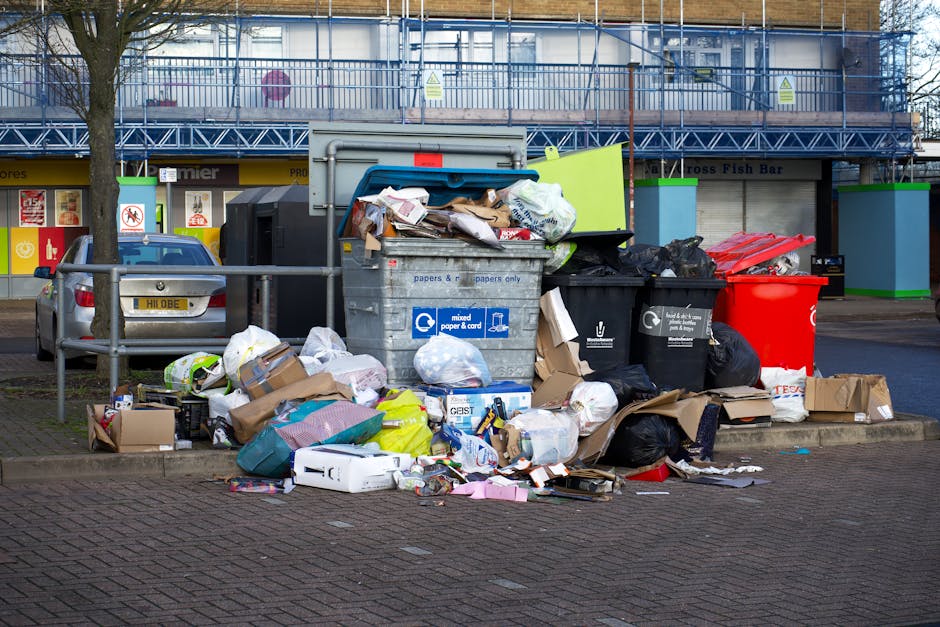
Rubbish removal near Upminster Station fast local service
If you need rubbish gone quickly and you are searching for Rubbish removal near Upminster Station fast local service, you are probably dealing with one of those messy, slightly stressful moments that never arrive at a convenient time. Maybe a flat move is happening tomorrow. Maybe builders have finished and left a pile of debris in the hallway. Or maybe the spare room has quietly become a storage unit for things you swore you would deal with "next weekend".
Whatever the reason, the good news is simple: a local, fast rubbish removal service can take the pressure off fast, without turning your day into a logistics puzzle. This guide explains how the service works, what it is best for, what to check before you book, and how to avoid the usual headaches around access, pricing, and waste types. If you are near Upminster Station, you will also find practical advice that makes same-day or short-notice collection feel a lot less chaotic.
Expert summary: the fastest, smoothest rubbish removal jobs are usually the ones where the waste is described clearly, access is checked in advance, and the provider knows exactly what needs taking away. A little preparation goes a long way. Honestly, it really does.
For broader service options, you may also want to look at our waste removal service, or if the job is mainly furniture, our pages for furniture clearance and furniture disposal can be helpful.
Table of Contents
- Why fast rubbish removal near Upminster Station matters
- How the service works
- Key benefits and practical advantages
- Who this is for and when it makes sense
- Step-by-step guidance
- Expert tips for better results
- Common mistakes to avoid
- Tools, resources and recommendations
- Law, compliance, standards and best practice
- Options and comparison table
- Case study or real-world example
- Practical checklist
- Conclusion
- Frequently asked questions
Why Rubbish removal near Upminster Station fast local service Matters
Speed matters because rubbish has a way of affecting everything else. A pile of broken furniture in the hallway makes moving boxes awkward. A garden clearance left half-finished can get in the way of access. Builder's waste can slow down decorating, and office clutter has a habit of turning a sensible workspace into a mildly irritating obstacle course.
Near a station, timing matters even more. Local streets can be busier around commuting hours, parking can be tight, and access may be easier at certain times of day. A fast local service is useful because it can work around real-world conditions rather than forcing you to fit into an inflexible schedule. That means less waiting, less double-handling, and usually less stress.
There is another practical side too: the sooner waste is removed, the sooner you can assess what is left, sort recyclable items properly, and get the space back into use. If you are trying to prepare a rental flat, clear a loft, or empty a garage before the weekend, delay tends to snowball. One bag turns into four. Four become a pile. You know the story.
Fast local rubbish removal is also valuable where waste is awkward or bulky. Think of a sofa that will not fit in the lift, a fridge that has been sitting in the kitchen for months, or renovation debris that is too heavy for you to deal with safely. In those cases, the question is not just "can it be removed?" but "can it be removed without making a bigger mess?"
How Rubbish removal near Upminster Station fast local service Works
The process is usually straightforward, but the details matter. A well-run service keeps things simple: you describe the waste, get a quote or estimate, agree a collection time, and the team removes the items with minimal disruption. For many households and businesses, that is the appeal. No hiring a van. No lifting heavy items down stairs. No wondering where to dump odd bits and pieces.
In practice, the job often starts with an enquiry. You explain what needs clearing, roughly how much there is, and whether access is straightforward. Is it a top-floor flat with no lift? Is there rear access? Are the items in a garage, loft, office, or garden? These small details affect how the collection is planned. They also affect how quickly it can be completed, so it pays to be honest and specific.
Depending on the provider, the collection may be booked for the same day, next day, or at a time that suits your schedule. A local team near Upminster Station will usually know the area well enough to plan around road layout, parking pressure, and property access. That can make a real difference when time is tight.
On arrival, the crew will normally confirm the load, assess any access challenges, and begin loading. Good practice means the space is left tidy, with the waste sorted for reuse or recycling where possible. If the rubbish includes specific items such as appliances, mattresses, or mixed household waste, those items may need different handling. For appliance-related jobs, our fridge and appliance removal service may be more relevant. For larger soft furnishings, see mattress and sofa disposal.
Typical rubbish removal flow
- You send photos or describe the waste clearly.
- The provider confirms what can be taken and what may need separate handling.
- A collection time is arranged, often quickly if the job is local.
- The team arrives, loads the waste, and checks access before lifting starts.
- The rubbish is taken for appropriate disposal, reuse, or recycling.
That is the clean version. The real version sometimes includes a narrow stairwell, a stubborn wardrobe, or someone discovering a hidden pile behind the shed. Still manageable, just a bit more human.
Key Benefits and Practical Advantages
The biggest advantage is obvious: you get space back quickly. But there are several smaller benefits that people often only notice after the job is done.
- Time saved: no sorting out vehicle hire, loading, driving, and unloading yourself.
- Less physical strain: helpful if the waste is bulky, heavy, or awkward.
- Flexible collection: useful for same-day or short-notice needs.
- Better for mixed waste: one trip can often clear a messy blend of items.
- Cleaner finish: the area is left usable again, not half-cleared.
- Local knowledge: a nearby team may be quicker to reach and easier to schedule.
There is also a mental benefit. It sounds a bit overdramatic, but clutter genuinely creates friction. Once the rubbish is removed, the whole place feels lighter. You will notice it when the hallway no longer smells of damp cardboard, or when the spare room suddenly looks like a room again.
For larger property clearances, it can make sense to use a more specific service. Our pages on house clearance, home clearance, and flat clearance may fit better if you are clearing an entire property rather than a few isolated items.
Practical takeaway: the fastest rubbish removal jobs are not only quick on the day, they are quick to arrange. Clear information upfront saves time, avoids awkward surprises, and helps the team bring the right people and equipment first time.
Who This Is For and When It Makes Sense
This kind of service is for anyone who has waste to remove and not enough time, space, or patience to deal with it alone. That includes homeowners, tenants, landlords, letting agents, tradespeople, local businesses, and anyone between moves. If the thought of lifting, sorting, and disposing of everything yourself feels like a minor dread, you are absolutely the target audience here.
It makes sense in all sorts of everyday situations:
- after a flat move when you need rubbish gone fast
- before new furniture or appliances are delivered
- after DIY work or light building projects
- when the loft, garage, or shed has become overloaded
- before a property viewing, sale, or end-of-tenancy inspection
- when office clutter is blocking a productive setup
Some jobs are better suited to specialist clearances. For example, if you have lots of rubble, plasterboard, timber offcuts, or renovation waste, it may be better to look at builders waste clearance. If you are dealing with commercial rubbish, our business waste removal page may be the more appropriate route.
Garden waste is another common case. A few bags of clippings are one thing; an overgrown plot, broken pots, old fencing, and compost sacks are another. In that sort of situation, garden clearance may be the right match.
Step-by-Step Guidance
If you want the smoothest possible experience, the secret is preparation. Not fancy preparation. Just enough to save time and prevent confusion.
1. Sort the waste into broad categories
You do not need to become a recycling technician. Just separate obvious groups if you can: general rubbish, furniture, electricals, garden waste, and anything potentially hazardous. Even rough sorting helps the collection run more efficiently.
2. Check access before you book
Is the waste on the ground floor or upstairs? Is there a lift? Is parking likely to be available nearby? If the team needs to carry items a long way or negotiate narrow stairs, mention it early. That small detail can change the whole shape of the job.
3. Photograph the items
Photos are one of the simplest ways to avoid misunderstandings. A quick image often says more than a paragraph. If the job includes unusual items, take a photo from a few angles. It does not have to be art. A slightly shaky phone picture is fine.
4. Confirm what can and cannot be taken
Some waste streams need special handling, especially hazardous materials. If you are unsure whether something is allowed, ask first rather than leaving it to chance. For items that need extra care, look into hazardous waste disposal. For confidential paperwork, confidential shredding can be more appropriate than general rubbish removal.
5. Choose a booking time that works around the area
Near a station, timing can be the difference between an easy collection and a frustrating one. Early morning or quieter mid-day slots may work better, depending on the site. If you have a tight deadline, say so. People often forget this part, then wonder why the day feels rushed. Fair enough, we all do it sometimes.
6. Make the waste easy to reach
Clear a path, move small obstacles, and group items together if possible. If the team can reach the waste quickly, the whole job becomes faster and safer. It is one of those tiny efforts that pays back immediately.
7. Ask how the waste will be handled
A trustworthy provider should be able to explain whether items will be reused, recycled, or disposed of responsibly. If sustainability matters to you, it should be part of the conversation, not an afterthought. Our recycling and sustainability page gives more context on that approach.
Expert Tips for Better Results
After enough clearance jobs, the same patterns keep appearing. The smooth ones are nearly always the same kind of smooth. A few small habits make the difference.
- Be precise about volume: "a few bags" and "a full van load" are very different things.
- Tell the truth about access: if there are three flights of stairs, say so.
- Keep fragile items separate: especially if there are items you want to keep.
- Book earlier than you think: same-day is great, but not always necessary if you can plan slightly ahead.
- Check whether items can be donated or reused: some furniture may be better passed on than thrown away.
One small but useful habit: take "before" photos for your own records. It helps if you are clearing a rental, managing a property, or simply want proof of what was removed. Not glamorous, but useful. Very useful, actually.
If you are clearing old office furniture or paperwork, the job can be more sensitive than it looks. That is when our office clearance and business waste removal services become more relevant than a general rubbish pickup.
Common Mistakes to Avoid
A few mistakes come up again and again. They are all fixable, but avoiding them in the first place saves time and money.
- Leaving access details out: surprise staircases are nobody's favourite surprise.
- Mixing ordinary rubbish with restricted waste: that can slow the job down.
- Underestimating the amount: a pile always looks smaller from the door.
- Assuming everything is handled the same way: appliances, mattresses, furniture, and rubble may need different treatment.
- Waiting until the last minute: especially around move-out dates or renovation deadlines.
- Choosing on price alone: the cheapest option is not always the easiest or safest.
Another common slip is forgetting about the final destination of the waste. Removal is only one part of the story. Good services also think about sorting, recycling, and lawful disposal. That is where a proper process matters more than a flashy promise.
Tools, Resources and Recommendations
You do not need specialist equipment for most small-to-medium rubbish removal jobs, but a few basic tools can make prep much easier:
- strong bin bags or rubble sacks for loose waste
- tape and labels for keeping items grouped
- a torch for lofts, sheds, and darker corners
- gloves if you are sorting through old items yourself
- a measuring tape if you want to estimate bulky furniture or appliance size
If the job includes awkward furniture, look at whether it belongs in a furniture-specific clearance route. For example, mattress and sofa disposal can be more appropriate than a general collection when the items are large and upholstered. Similarly, if you are dealing with a garage full of mixed odds and ends, our garage clearance service can be a better fit.
For readers who want to understand what can be loaded into a skip versus what may need separate handling, what can go in a skip is a useful reference point. It is not identical to rubbish removal, of course, but it helps people think through waste categories in a sensible way.
And if your priority is simply to book quickly, you can use the online booking option when it suits you. Sometimes the easiest solution really is the easiest one.
Law, Compliance, Standards and Best Practice
Waste removal in the UK sits within a framework of legal and practical responsibilities, even when the job looks simple from the outside. You do not need to memorise legislation, but it does help to know the broad expectations.
In plain terms, waste should be managed responsibly, transferred to appropriate facilities, and handled by providers who understand what they are doing. If you are a homeowner, landlord, or business, you still have a duty to think carefully about where your rubbish goes. That is especially true for items that may be classed as hazardous, confidential, or specialist waste.
Best practice usually means the provider:
- describes what waste they can accept
- handles items safely during loading and transport
- sorts for reuse or recycling where possible
- uses clear, fair pricing
- communicates any restrictions before arrival
For customers, best practice means being upfront about what needs removing, keeping restricted waste separate where possible, and not assuming every item can be collected in the same way. If you are unsure about safety, insurance, or handling, it is reasonable to ask. In fact, it is the sensible thing to do.
For peace of mind, you may also want to read our pages on health and safety policy, insurance and safety, and payment and security. They help explain how a reputable service should think about risk, protection, and transaction handling.
Options and Comparison Table
People often compare rubbish removal with skip hire, and it is a fair comparison. Both can solve a waste problem, but they suit different situations.
| Option | Best for | Main advantage | Possible drawback |
|---|---|---|---|
| Fast rubbish removal | Mixed waste, bulky items, tight deadlines | Little effort from you, quick collection | May be less suitable for ongoing, very large projects |
| Skip hire | Longer DIY projects or repeated loading over time | You can fill it at your own pace | Needs space, permits may be relevant, and you load it yourself |
| Specialist clearance | Furniture, appliances, lofts, garages, offices, whole properties | More tailored to the type of waste | May be overkill for a tiny load |
To be fair, the "best" option depends on the mess in front of you. If you have a pile of renovation offcuts and plenty of time, a skip may work. If you have awkward furniture in a fourth-floor flat and need it gone before tomorrow afternoon, a fast local clearance service is usually the better call.
For people who want a better sense of disposal choices, our pricing and quotes page can also help set expectations before booking.
Case Study or Real-World Example
A typical local scenario looks like this: a resident near Upminster Station is clearing a one-bedroom flat after a move. There is a broken wardrobe, a mattress, two small bookcases, several black bags of mixed household waste, and a few leftover items from the kitchen. The lift is small. The hallway is narrow. And the new tenants are due in less than 24 hours.
Instead of trying to squeeze everything into a car or arranging multiple trips, the resident sends photos, explains access, and books a fast collection. The crew arrives, checks the route through the building, and removes the items in one visit. Because the waste was described clearly, the team came prepared. Because the access details were accurate, there were no delays. Because the items were grouped in advance, the loading was quick.
The result is not dramatic. That is the point. The flat is empty, the hallway is clear, the keys can be handed over, and nobody has to spend the evening staring at a pile of rubbish wondering why they started this whole thing so late. It's a simple win, but a very real one.
If the same flat had included more general moving-out waste, a broader flat clearance approach would have made sense. If it had been a larger family property, house clearance would likely be the better fit.
Practical Checklist
Use this quick checklist before booking rubbish removal near Upminster Station:
- Identify the main waste type: household, furniture, garden, builder's, office, or mixed.
- Take a few photos from different angles.
- Check whether the waste is easy to reach.
- Note stairs, lifts, parking, and any narrow access points.
- Separate hazardous or sensitive items from general rubbish.
- Estimate roughly how much needs removing.
- Decide whether you need same-day collection or can wait a little.
- Confirm whether recycling or reuse is part of the service.
- Ask about payment, timing, and any restrictions.
- Prepare the area so the crew can get in and out safely.
If you do those ten things, you are already ahead of most people. And you will probably save yourself a bit of time, which never hurts.
Conclusion
Fast rubbish removal near Upminster Station is really about making a difficult job feel manageable. Whether you are clearing a flat, tidying a garage, handling office waste, or getting rid of bulky furniture, the right local service should save time, reduce stress, and leave you with a space that feels usable again.
The key is to be clear about the waste, honest about access, and realistic about timing. Do that, and the whole process becomes much easier. No drama, no guesswork, no half-finished pile lingering by the door. Just a cleaner space and one less thing hanging over you.
If you are ready to move ahead, take a moment to compare your waste type with the most relevant service pages, check the practical details, and choose a booking slot that suits your day. Simple enough, really. And once the clutter is gone, the relief is immediate. That quiet empty-space feeling? Hard to beat.
Get a free quote today and see how much you can save.
For more about who we are and how we work, visit our about us page or get in touch when you are ready.
Frequently Asked Questions
How fast can rubbish removal near Upminster Station be arranged?
In many cases, fast local rubbish removal can be arranged the same day or next day, depending on the size of the job and current availability. The more clearly you describe the waste, the easier it is to schedule quickly.
What types of rubbish can usually be collected?
Common collections include general household rubbish, furniture, garden waste, office clutter, and builder's waste. Some items need separate handling, especially hazardous materials, heavy appliances, or confidential paperwork.
Do I need to move everything outside before collection?
Not usually. Many services will remove items from inside a property, garage, loft, or garden, as long as access is safe and clearly described in advance. That said, making items easy to reach helps a lot.
Is rubbish removal better than skip hire?
It depends on the job. Rubbish removal is often better for quick clearances, bulky items, and mixed loads. Skip hire can be better for longer DIY projects where you want to load waste over time.
How do I know if my waste is hazardous?
If the waste includes chemicals, certain paints, fuels, asbestos-related materials, or anything that could pose a safety risk, treat it as potentially hazardous and ask for advice before booking. Do not leave this to guesswork.
Can I book rubbish removal for a flat with stairs and no lift?
Yes, but you should mention the access details upfront. Stairs, narrow landings, and parking limitations can affect how the job is planned and how long it takes.
What should I do with old furniture I no longer want?
Furniture can often be collected as part of a general clearance, or through a more specific furniture service. Sofas and mattresses may need special handling, so it is worth checking the most suitable option first.
Can businesses near Upminster Station use the service too?
Yes. Offices, shops, and other local businesses often need quick waste removal for clear-outs, refurbishments, or regular clutter management. Business waste should be handled carefully and in line with your needs.
How can I keep the cost down?
Clear access, accurate photos, and good sorting all help keep the job efficient. It also helps to avoid last-minute surprises, because unexpected items can increase the scope of the collection.
Will rubbish be recycled where possible?
It should be, where suitable. Responsible waste handling usually includes reuse and recycling wherever practical, though not every item can be treated the same way. Asking about this in advance is a good sign you are choosing the right provider.
What happens if I am not sure what can be taken?
Ask before the appointment. A good provider will tell you what is acceptable, what needs separate handling, and what may need a different service. It is much easier to sort that out early than on the driveway.
Where can I find more details about your service standards?
You can read more about our approach through pages such as insurance and safety, health and safety policy, and recycling and sustainability. They explain the practical standards behind a well-run clearance service.